
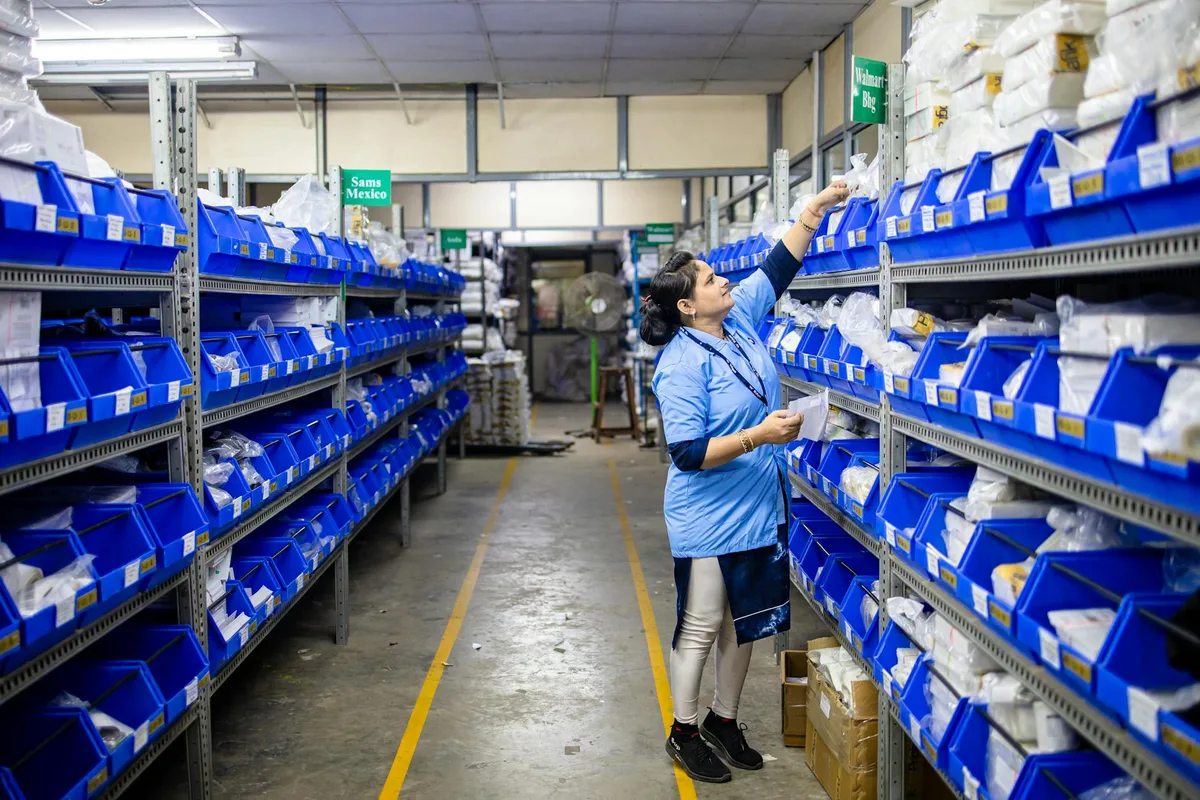
Your picker just sent the wrong item to a Shopee SG buyer. Again.
The pick list was in someone’s head. New stock arrived last week and went wherever there was shelf space. Now you have a return request, a rating penalty, and a staff member certain they picked the right product.
A whse management system makes that sequence impossible.
“Whse” is the standard logistics abbreviation for warehouse — used across shipping documents, purchase orders, and inventory software throughout Singapore and the broader region. A whse management system, also written as “whse mgmt system” or WMS, is software that assigns every product a specific storage location, generates structured pick lists, and logs every inventory movement inside your warehouse.
What Does “Whse” Mean in Warehouse Management?
“Whse” is the logistics abbreviation for warehouse. A whse management system (whse mgmt system or WMS) is software that organizes warehouse operations: it assigns products to specific bin locations, generates pick lists for warehouse staff, tracks every stock movement, and runs inventory counts to catch discrepancies before they cause marketplace errors. Singapore sellers use the abbreviation interchangeably with “warehouse management system.”
The abbreviation appears on goods receipts, purchase orders, delivery orders, and inside most WMS software interfaces. When a Singapore seller asks about a “whse management system,” they mean the same tool as “warehouse management system Singapore.”
Singapore’s ecommerce environment adds operational pressure that makes structured warehouse processes more important than in less time-sensitive markets. According to Google, Temasek, and Bain’s e-Conomy SEA 2024 report, Southeast Asia’s ecommerce sector reached over USD 159 billion in GMV in 2023, with Singapore among the region’s most operationally sophisticated markets. Shoppers accustomed to same-day and next-day fulfillment treat a wrong shipment as a breach, not an inconvenience — and marketplace penalty systems treat it the same way.
What Does a Whse Management System Actually Do?
A whse management system performs five core functions: storage location assignment, pick list generation, goods receiving and put-away, stock movement tracking, and cycle counting. Each converts a manual, memory-based warehouse operation into a traceable, repeatable process.
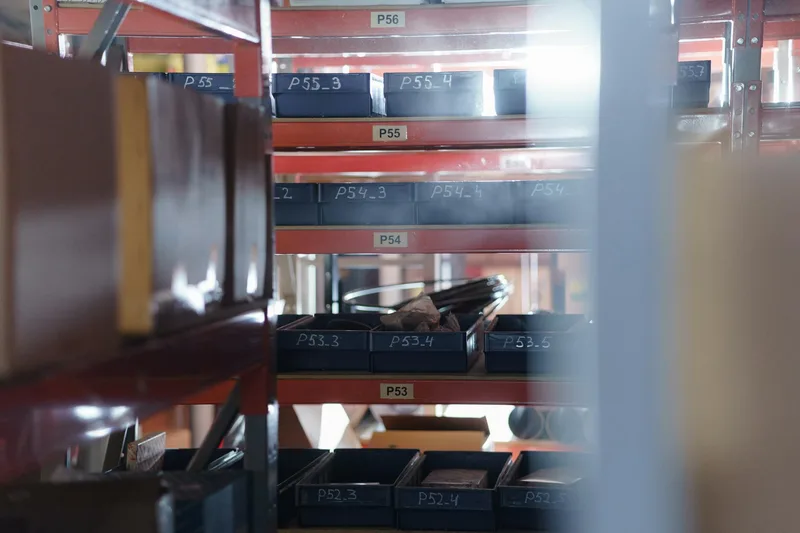
Storage location assignment gives every SKU a specific address — a code like A1-R2-S3-B04 (Aisle 1, Rack 2, Shelf 3, Bin 04). New stock gets a bin on arrival. Orders generate a pick location instead of a memory test.
Pick list generation replaces memory-based picking with a sorted warehouse route. Advanced tools group multiple orders into a single pass so each bin location is visited once rather than multiple times per shift.
Goods receiving guides the team when inbound stock arrives: scan each item, verify against the purchase order, and the system assigns a bin. This eliminates the “put it wherever there is space” pattern that makes stock unfindable within days of receiving.
Stock movement tracking creates an audit trail for every inventory event: received at dock, moved to bin B-07, picked for order #41923, scanned at packing station. When a discrepancy appears between your system count and Shopee SG or Lazada SG listing quantities, the movement log shows exactly where the gap appeared.
Cycle counting replaces full warehouse shutdowns for stock audits with a continuous, small-scale counting schedule. The system assigns daily count tasks — typically 10-20 bin locations per day — so every location is verified regularly without halting operations.
When Does a Singapore Ecommerce Operation Need a Whse Management System?
A Singapore ecommerce seller typically needs a whse management system when they hit three or more of these thresholds: 200+ active SKUs, 50+ daily orders across two or more marketplace channels, two or more warehouse staff, or multiple storage zones. Most sellers researching a WMS are already past the point where they needed one.
Singapore warehouse space is expensive relative to the broader region. That creates pressure to run dense, well-organized storage from an early stage — which is where structured WMS workflows pay back fastest.
Here is a scale-matching framework for Singapore operations:
| Operation Size | Orders/Day | SKUs | Staff | Recommended Approach |
|---|---|---|---|---|
| Early stage | Under 30 | Under 100 | 1-2 | Spreadsheet or Ginee basic tier |
| Growing | 30-80 | 100-200 | 2-4 | Ginee or SiteGiant WMS starter |
| Mid-market | 80-300 | 200-800 | 4-10 | HashMicro WMS module or Anchanto SMB |
| Scale | 300+ | 800+ | 10+ | Anchanto enterprise or dedicated WMS |
Tier descriptions based on each platform’s Singapore feature documentation and seller community reports as of Q2 2026. Verify current tier limits directly with each vendor before committing.
The clearest signal that a WMS is overdue: warehouse staff cannot answer “where exactly is [SKU] right now?” without walking the floor.
How Do Whse Management Systems Connect to Singapore Marketplaces?
Whse management systems in Singapore connect to Shopee SG, Lazada SG, and TikTok Shop SG through direct API integrations. Stock updates push from the WMS to all connected marketplace listings automatically after each pick, keeping live quantities aligned with physical inventory and reducing the overselling errors that trigger Shopee SG seller penalties and Lazada SG account flags.
The integration runs in two directions:
Inbound (orders to WMS): A Shopee SG order flows into the WMS, generates a pick list for warehouse staff, and the marketplace status updates automatically once the pick is confirmed at the packing station.
Outbound (stock to marketplaces): When a pick reduces physical stock, the WMS pushes updated quantities to all connected marketplace listings — Shopee SG, Lazada SG, TikTok Shop SG — within minutes of the pick event. This prevents 8 remaining units from showing as 80 available across your storefronts.
Enterprise Singapore offers productivity and digitalisation grants that qualifying Singapore SMEs can use to offset the cost of adopting warehouse management tools. Check the Enterprise Development Grant (EDG) criteria for current eligibility requirements.
Integration sync speed varies by platform: Ginee and Anchanto offer near-real-time stock sync; some platforms update on a 5-15 minute cycle. Confirm the actual sync interval with your vendor before committing — for high-velocity Singapore sellers, a 15-minute delay creates real overselling risk.
Which Whse Management Systems Are Available in Singapore?
Singapore sellers evaluating a whse management system have four main options: Ginee (entry-level inventory and order management), SiteGiant WMS (Singapore marketplace-focused), HashMicro (Singapore-based ERP with WMS module), and Anchanto (Singapore HQ, enterprise-grade WMS). Pricing ranges from SGD 45/month to SGD 1,000+ per month for enterprise platforms, based on vendor Singapore documentation and seller community reports.
| Platform | Best For | Core WMS Features | Est. Pricing (SGD/month) |
|---|---|---|---|
| Ginee | Small multi-channel sellers | Basic inventory sync, order management, Shopee SG + Lazada SG | SGD 45-80 |
| SiteGiant WMS | Singapore marketplace sellers | Inventory sync, pick lists, Shopee SG + Lazada SG integrations | Contact vendor |
| HashMicro | Mid-market, Singapore-based ERP | Full WMS module, bin management, analytics, enterprise reporting | Custom, typically SGD 300-800+ |
| Anchanto | Enterprise, 3PL and large-scale operations | Full WMS: slotting, labor tracking, cycle counts, advanced reporting | Custom, SGD 1,000+ |
Pricing sourced from each platform’s Singapore documentation and seller community reports as of Q2 2026. Confirm current rates directly with each vendor before committing.
Anchanto is headquartered in Singapore and supports multi-warehouse operations — the strongest option for sellers running 3PL partnerships or operating across multiple storage locations. HashMicro covers WMS as part of a broader ERP suite, which adds value if you also need accounting, purchasing, or HR in the same system. Ginee fits sellers who need multi-channel inventory sync without the complexity of a dedicated WMS.
For a detailed feature comparison of WMS tools available in the Singapore market — including bin-level tracking, wave picking, and barcode scanning support — see the full WMS guide for Singapore ecommerce sellers.
How Do You Set Up a Whse Management System for a Singapore Warehouse?
Setting up a whse management system for a Singapore ecommerce operation typically takes 2-3 weeks. The critical path: audit and number your bin layout, import your SKU list, assign bin locations, configure marketplace integrations, run a parallel test with live orders, and train warehouse staff on the pick list workflow.
The setup runs in four phases. First, audit and number every bin with a grid code (Aisle, Rack, Shelf, Bin), then import your full SKU list — exported from Shopee SG Seller Centre or your current inventory tool — and resolve duplicate SKU codes during import. Second, assign each SKU a bin: fast-moving products near the packing station, slow movers on higher or rear shelves. Connect Shopee SG, Lazada SG, and TikTok Shop SG accounts via OAuth and verify that synced stock counts match your live listings before activating the WMS. Third, run the WMS in parallel with your existing process for 5-7 days to catch integration gaps before full cutover. Fourth, train staff on pick list navigation, scanner use (if applicable), and the receiving workflow — most Singapore operations reach full operational speed within the first week, based on seller reports in regional ecommerce communities.
For a broader comparison of Singapore order management system options — covering OMS features alongside WMS, and how the two systems work together — the full Singapore hub covers the complete toolkit.
Frequently Asked Questions
What does whse stand for in warehouse management?
Whse is the logistics abbreviation for warehouse — used on shipping documents, purchase orders, and inside inventory software interfaces. A whse management system (also called whse mgmt system or WMS) is the same as a warehouse management system: software that assigns products to specific bin locations, generates pick lists for warehouse staff, and tracks every inventory movement inside a warehouse. Singapore sellers use the abbreviation interchangeably with the full term.
Does a whse management system work with Shopee SG and Lazada SG?
Yes. The main whse management tools in Singapore — Ginee, Anchanto, and HashMicro — all integrate with Shopee SG, Lazada SG, and TikTok Shop SG via API. Stock updates push to all connected marketplace listings after each pick event. Integration sync speed varies by platform: Ginee and Anchanto offer near-real-time stock sync; some platforms operate on a 5-15 minute update cycle. Confirm actual sync intervals with your vendor before going live.
When does a Singapore ecommerce seller need a whse management system?
A whse management system becomes necessary when you store 200+ active SKUs, process 50+ daily orders across two or more marketplace channels, or employ warehouse staff who need structured pick lists to avoid picking errors. Below 100 SKUs and 30 daily orders, Ginee’s inventory features or a well-structured spreadsheet typically covers the need without the setup overhead of a full WMS.
How much does a whse management system cost in Singapore?
Whse management system pricing for Singapore sellers typically ranges from SGD 45-80 per month for basic inventory tools like Ginee to SGD 300-800 per month for mid-tier platforms with genuine warehouse modules like HashMicro. Enterprise solutions like Anchanto are priced on custom contracts, typically starting at SGD 1,000+ per month depending on order volume and warehouse complexity. Pricing is sourced from vendor Singapore documentation and seller community reports as of Q2 2026 — confirm current rates directly with each vendor before committing.
What is the difference between a whse management system and an order management system?
A whse management system manages what happens inside the warehouse: bin locations, pick lists, stock movement tracking, and cycle counts. An order management system handles the order lifecycle outside the warehouse: capturing orders from Shopee SG and Lazada SG, generating courier labels, and syncing tracking numbers back to each marketplace. Most Singapore mid-market tools like Ginee and Anchanto combine basic functions of both in a single platform — useful for sellers who need both layers without running two separate systems.