Ecommerce Fulfillment and 3PL for Philippine Sellers
Compare 3PL providers and fulfillment options for Philippine ecommerce sellers. In-house vs outsourced, COD handling, and cost breakdowns for Shopee and Lazada.
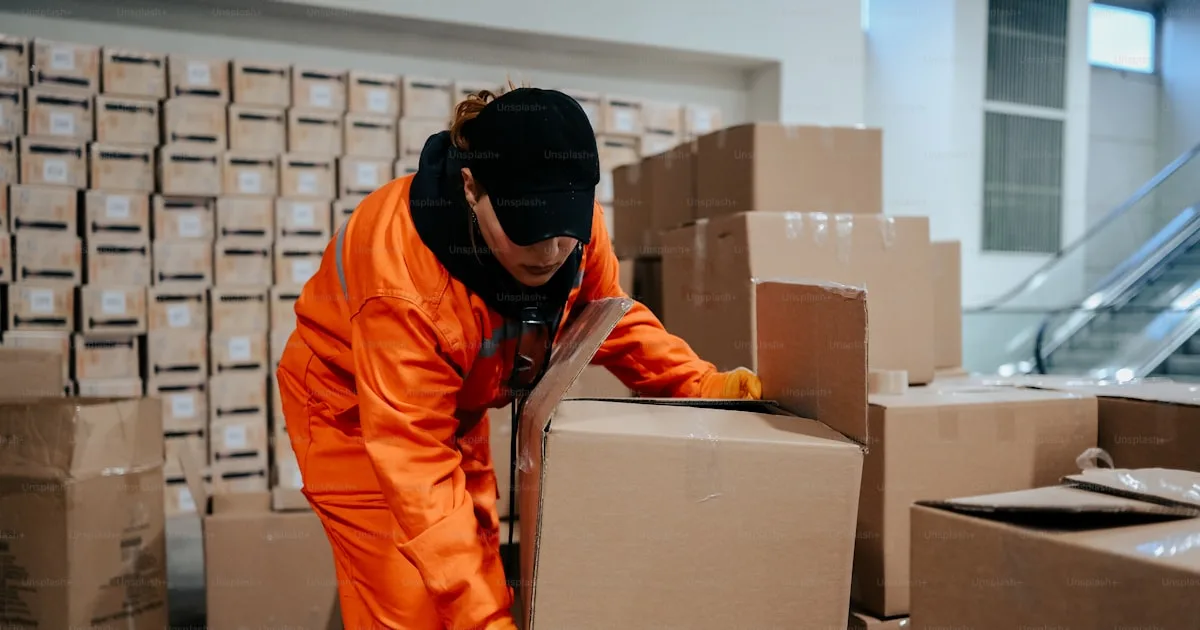
Your Shopee orders tripled last month. Your living room did not get any bigger.
If you are packing orders on your dining table, driving to the courier drop-off point twice a day, and losing track of which returns came back from which buyer, you have hit the ceiling that every growing Philippine ecommerce seller reaches. Ecommerce fulfillment — whether in-house or through a 3PL (third-party logistics) provider — is the system that gets orders from your inventory to your customer’s door. This guide covers what 3PL means for Filipino sellers, when it makes sense to outsource, which providers work in the Philippine market, and how to handle the COD challenge that makes fulfillment here uniquely complicated.
What Is Ecommerce Fulfillment and 3PL?
Ecommerce fulfillment is everything that happens between a customer clicking “Place Order” and receiving their package. It covers warehousing (storing your products), picking (finding the right item), packing (boxing it securely), shipping (handing it to a courier), and returns processing (handling packages that come back).
A 3PL — third-party logistics provider — is a company that handles some or all of these steps for you. Instead of renting your own warehouse, hiring your own packers, and managing courier pickups yourself, you send your inventory to the 3PL’s facility and they fulfill orders on your behalf. You pay per order fulfilled and per unit stored, rather than carrying the fixed costs of warehouse rent, staff salaries, and packing supplies.
According to the Philippine Statistics Authority (PSA), the logistics and transportation sector continues to be one of the fastest-growing service industries in the country, driven in large part by ecommerce growth. For sellers who have outgrown home-based fulfillment but cannot justify the cost of a dedicated warehouse, 3PL fills the gap.
But outsourcing fulfillment is not the right move for every seller — and choosing the wrong provider can create problems worse than packing orders yourself.
Why Fulfillment Matters for Philippine Sellers
Imagine you sell phone accessories on Shopee and Lazada Philippines. Business is good — you process 40-60 orders per day. You and one helper handle everything from your home: printing labels, cutting bubble wrap, taping boxes, scheduling courier pickups with J&T Express and Ninja Van. During 9.9 or 11.11 sales, order volume spikes to 150-200 per day. Your helper calls in sick. Courier pickup windows get missed. Packages stack up. Shopee’s late shipment penalty kicks in. Your seller rating drops from 4.8 to 4.5.
This scenario plays out across thousands of Philippine ecommerce businesses every campaign season. The core problem is not the seller’s work ethic — it is the lack of a fulfillment system that scales independently of the seller’s personal capacity.
The Philippine market adds specific complications that make fulfillment harder than in many other countries. COD remains a dominant payment method — the Bangko Sentral ng Pilipinas (BSP) reports that cash-based transactions still represent a major share of Philippine commerce. COD orders get refused at the door more often than prepaid orders, creating a reverse logistics burden (the package travels to the customer, gets rejected, and travels back — and you pay shipping both ways). Provincial deliveries outside Metro Manila take 3-7 days through standard couriers, and island shipments to Visayas and Mindanao can take longer. Customers expect fast delivery because Shopee and Lazada’s own fulfillment programs have set that standard.
Getting fulfillment right directly impacts your seller scores, your customer reviews, and your ability to grow without burning out. The question is whether to build your own system or pay someone else to handle it.
In-House vs. Outsourced Fulfillment
The first decision every growing Philippine seller faces: do I keep fulfilling orders myself (or with my own team), or do I hand it to a 3PL? Neither option is universally better — it depends on your volume, your margins, and how much control you need.
In-House Fulfillment
You rent (or use) your own space, hire your own staff, buy your own packing materials, and manage courier relationships directly.
Works best for:
- Sellers processing under 30 orders per day
- Products that need special handling (fragile items, food, custom packaging)
- Sellers with existing warehouse space (e.g., a family-owned retail store transitioning to ecommerce)
- Businesses where product inspection before shipping is critical
Typical costs (Metro Manila):
- Warehouse/storage: PHP 15,000-40,000 per month for a small commercial space in Pasig or Quezon City
- Staff: PHP 15,000-20,000 per month per packer (minimum wage plus benefits)
- Packing materials: PHP 10-25 per order depending on product size
- Courier: PHP 85-150 per standard package within Metro Manila
The math: At 30 orders per day (900 per month), in-house fulfillment costs approximately PHP 80,000-120,000 per month including space, one staff member, materials, and courier fees. That is roughly PHP 90-130 per order all-in.
Outsourced 3PL Fulfillment
You ship your inventory to a 3PL warehouse. They store it, and when orders come in, they pick, pack, and ship on your behalf.
Works best for:
- Sellers processing 50+ orders per day consistently
- Sellers on multiple marketplaces who need centralized fulfillment
- Sellers who want to focus on marketing and product sourcing, not operations
- Sellers with standardized products that do not require custom handling
Typical costs (Philippine 3PL):
- Storage: PHP 5-15 per unit per month
- Pick and pack: PHP 30-80 per order
- Shipping: Varies by courier and destination (typically passed through at negotiated rates)
- Receiving: PHP 2-5 per unit for inbound inventory processing
The math: At 100 orders per day (3,000 per month) with average product size, 3PL fulfillment costs approximately PHP 120-180 per order including storage, pick-pack, and standard Metro Manila shipping.
The crossover point — where 3PL becomes cheaper than in-house — typically falls around 50-80 orders per day for Philippine sellers, depending on product size and warehouse location. Below that volume, the per-order 3PL fees often exceed what you would spend doing it yourself.
But cost is only one factor. The next section covers what makes or breaks a 3PL relationship in the Philippines specifically.
The Philippine Fulfillment Landscape
The 3PL market for Philippine ecommerce is still maturing. It is smaller and less competitive than Indonesia’s or Thailand’s fulfillment ecosystem, which means fewer options but also less noise to sort through.
Marketplace-Native Fulfillment
Both Shopee and Lazada offer their own fulfillment programs in the Philippines:
Fulfilled by Shopee (FBS): Shopee stores and ships your products from their own warehouse. Benefits include the “Preferred” badge on listings (which can improve click-through rates), priority placement during campaigns, and competitive shipping rates. The limitation: FBS inventory can only be used for Shopee orders. If you also sell on Lazada or TikTok Shop, you need separate inventory for those channels.
Fulfilled by Lazada (FBL): Similar concept — Lazada warehouses and ships your products. You get the “LazMall” or “FBL” badge and faster delivery promises. Same limitation: FBL inventory serves Lazada orders only.
TikTok Shop Fulfillment: TikTok Shop Philippines has been expanding its logistics network with local courier partnerships. The program is newer than FBS or FBL, but worth monitoring if TikTok Shop is a growing sales channel for you.
Third-Party 3PL Providers
For sellers who need multi-channel fulfillment from a single inventory pool, independent 3PLs are the option. Key players in the Philippine market:
- Locad — The most frequently cited 3PL for Philippine ecommerce sellers. Warehouses in Metro Manila with integrations for Shopee, Lazada, and TikTok Shop. Multi-channel fulfillment from a single stock pool with transparent, volume-based pricing.
- Ninja Van Fulfillment — Already one of the Philippines’ largest last-mile couriers, Ninja Van offers warehousing and fulfillment with tight integration into their own delivery network.
- Shipmonk / ShipHero — International 3PLs with Philippine operations, suited for sellers with international sales alongside domestic channels.
For a detailed step-by-step look at the pick and pack process itself, see our upcoming guide to pick-and-pack processes for ecommerce.
The COD Challenge
Cash-on-delivery is the elephant in every Philippine fulfillment discussion. Despite the growth of digital payments through GCash and PayMaya, COD remains a major payment method for Philippine ecommerce — particularly for first-time buyers and customers outside Metro Manila.
COD creates three specific fulfillment problems:
Problem 1: Failed deliveries. The buyer is not home, changes their mind, or claims they never ordered. The courier returns the package to your warehouse or 3PL. You pay outbound and return shipping. For a PHP 500 product with PHP 150 total shipping (outbound + return), a failed COD delivery wipes out your margin entirely.
Problem 2: Cash reconciliation. Courier-collected cash takes 5-15 business days to reach your account. You have already shipped the product and paid your supplier. For sellers processing 100+ COD orders per day, this cash flow gap compounds fast.
Problem 3: Higher return rates. COD buyers have not put money down, so refusing at the door costs them nothing. Based on seller community feedback in Philippine ecommerce Facebook groups, COD return rates run 10-20% compared to 3-5% for prepaid orders.
Reducing COD failures:
- Confirm orders via SMS or Shopee/Lazada chat before shipping. A simple “Hi, confirming your order for [product] to be delivered to [address]. Please confirm.” catches fake orders and address errors.
- Offer a small discount (PHP 20-50) for prepaid orders to incentivize digital payment.
- Restrict COD to orders above a minimum value (e.g., PHP 300) to filter out impulse orders with high refusal risk.
- For repeat customers with a history of successful COD deliveries, continue offering COD. For new buyers ordering high-value items, encourage prepaid.
The COD problem is not going away soon. Any fulfillment strategy for the Philippines must account for it in cost projections and process design.
How to Choose the Right Fulfillment Approach
Selecting a fulfillment model is not about finding the “best” option — it is about matching the model to your current volume, growth rate, and channel mix. Here is a decision framework for Philippine sellers.
Profile 1: Early seller (under 30 orders/day, single marketplace)
Keep fulfillment in-house. You do not have enough volume to justify 3PL minimum fees, and you benefit from handling products directly (learning what customers order, how products arrive, which packaging works). Use Shopee’s FBS or Lazada’s FBL only if you qualify and want the seller badge. Total monthly fulfillment cost: PHP 30,000-60,000 depending on location and volume.
Profile 2: Growing seller (30-100 orders/day, 2-3 marketplaces)
This is the decision zone. If your product is standardized and does not require special handling, evaluate 3PL options — Locad is the most common starting point. If your product needs inspection or custom packaging, consider hiring 1-2 additional staff and renting a small commercial space instead. Request quotes from at least two 3PL providers and compare total cost per order against your current in-house cost. Total monthly fulfillment cost: PHP 100,000-300,000.
Profile 3: Scale seller (100+ orders/day, multi-channel)
At this volume, 3PL becomes a serious operational advantage. You should be evaluating providers based on sync speed with your marketplace accounts, return processing capability, provincial shipping rates, and COD handling. If you sell across Shopee, Lazada, and TikTok Shop, a multi-channel 3PL (like Locad) is preferable to using each marketplace’s native fulfillment separately. Total monthly fulfillment cost: PHP 300,000-800,000+.
Before signing any 3PL contract, send a test batch of 50-100 units and process real orders through their system for 2 weeks. Check pick accuracy, packing quality, delivery speed, and return handling. For a broader logistics strategy overview, see our guide to 3PL logistics for ecommerce.
Common Mistakes
Philippine sellers make recurring errors when setting up or outsourcing fulfillment. Avoid these.
Switching to 3PL too early. If you process under 30 orders per day, the per-order cost of a 3PL usually exceeds what you would spend fulfilling from home or a small rented space. You also lose hands-on knowledge of your products and packaging. Wait until volume consistently exceeds the crossover point before outsourcing.
Ignoring COD costs in fulfillment calculations. When comparing in-house vs. 3PL costs, many sellers forget to include the cost of failed COD deliveries: double shipping, return processing, and restocking. Add a COD failure cost estimate (10-15% of COD order volume times double the shipping cost) to any fulfillment budget projection.
Using marketplace fulfillment for multi-channel. FBS serves Shopee only. FBL serves Lazada only. Using both means maintaining two separate inventory pools, which complicates stock management. For multi-channel sellers, this approach often creates more problems than it solves. If you sell on 3+ channels, a single 3PL with multi-marketplace integration is more efficient. For guidance on keeping inventory accurate across channels, see our ecommerce inventory management hub.
Not testing provincial shipping rates. Metro Manila shipping is cheap and fast. Provincial and inter-island shipping to Visayas and Mindanao costs 2-3 times more and takes significantly longer. If a meaningful share of your customers are outside Metro Manila, check your 3PL’s provincial rates before committing.
Skipping the return processing evaluation. Every 3PL demo focuses on outbound fulfillment — how fast they pick, pack, and ship. Few sellers ask about return processing: How quickly are returned items inspected? How fast are they restocked? What is the return processing fee? Given the Philippines’ COD return rates, return handling is not a secondary feature — it is core to your fulfillment operation.
Explore Fulfillment and 3PL Guides
This hub covers every aspect of ecommerce fulfillment for Philippine sellers. Start with the guides most relevant to your situation.
Fulfillment Operations
- Pick and Pack Process for Ecommerce – Step-by-step guide to efficient pick-and-pack operations, whether in-house or through a 3PL
- 3PL Logistics Guide for Philippine Sellers – How to evaluate, onboard, and manage a third-party logistics provider in the Philippines
Related Hubs
Fulfillment connects directly to inventory management and order processing. These related guides cover the operational areas that impact your fulfillment performance:
- Ecommerce Order Management Systems – Centralized order processing and shipping automation for multi-channel sellers
- Ecommerce Inventory Management – Stock tracking, multi-channel sync, and reorder management for Southeast Asian sellers
- 3PL Logistics Guide for Singapore – Compare Singapore 3PL providers and cross-border fulfillment options to the Philippines and beyond
Right now, you might be packing orders between meals, racing to courier drop-off points, and dreading the next campaign sale. Three months from now, you could have a fulfillment system — in-house or outsourced — that handles volume spikes without missing a beat while you focus on growing your product line and your revenue. Start with the guide that matches your biggest bottleneck.