
Spreadsheets do not generate pick lists. They do not assign bin locations. They do not sync with Shopee.
WMS software does all three — and the right choice depends on your warehouse size, daily order volume, and how many marketplaces you sell on.
What WMS Software Does
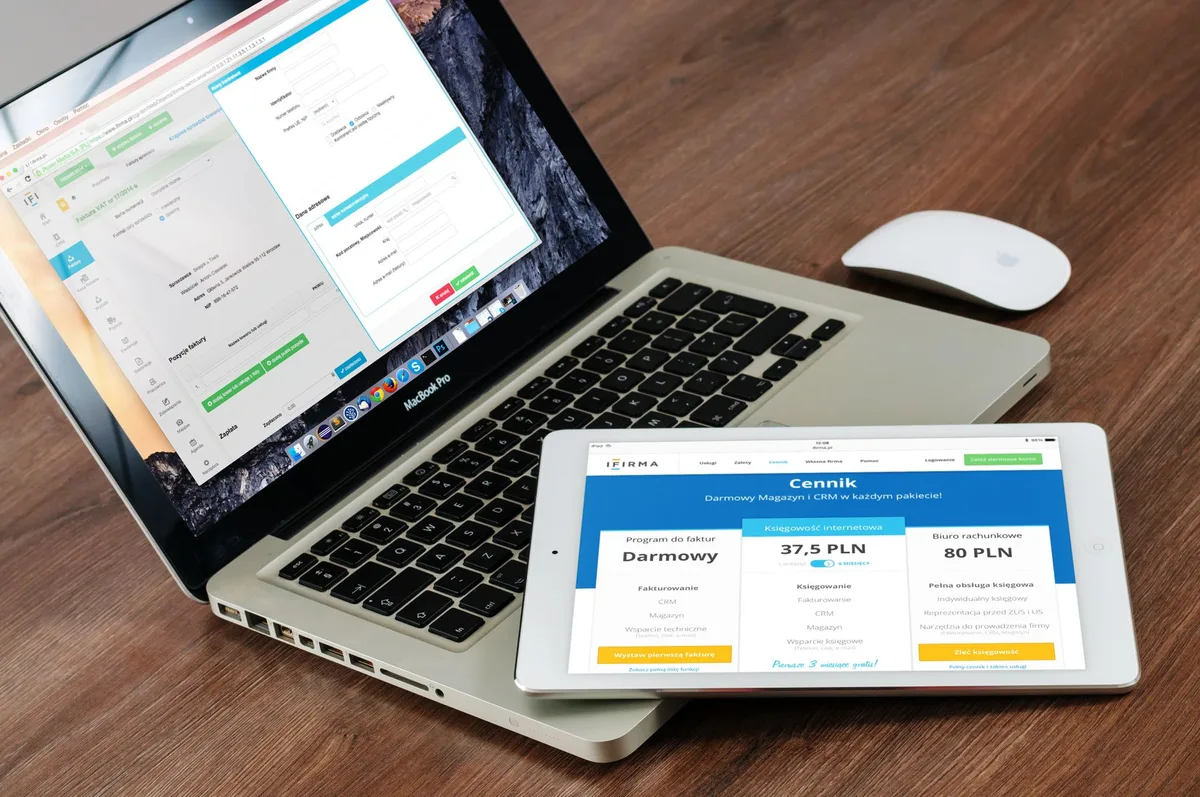
WMS software (warehouse management system software) assigns every product a physical storage location, generates pick lists for warehouse staff, tracks stock movement between locations, and runs cycle counts to verify inventory accuracy. For Indonesian ecommerce sellers, WMS software connects to Shopee, Lazada, Tokopedia, and TikTok Shop so marketplace orders automatically create warehouse pick instructions without manual data entry.
When an order comes in through Shopee, WMS software reads that order, identifies where each item is stored in your warehouse, and generates a pick list for your staff. The picker does not need to know the warehouse layout from memory — the software tells them which bin to go to and what to grab.
After picking, the software updates inventory counts across all connected marketplaces simultaneously. If you sold your last unit, it marks the product out of stock on every channel before a second order can come in for the same item.
This closed loop — order in, pick list out, inventory updated — is what separates WMS software from a spreadsheet. According to Google, Temasek, and Bain’s e-Conomy SEA report, Indonesia’s ecommerce GMV exceeded USD 60 billion in 2023, and multi-channel sellers running warehouse operations on manual systems are increasingly unable to keep pace with order volumes at scale.
For a deeper look at how WMS works inside the warehouse, see the WMS systems guide which covers bin management, wave picking, cycle counting, and receiving workflows in detail.
Types of WMS Software Available in Indonesia
Indonesian ecommerce sellers can choose from three categories of WMS software: combined OMS+WMS tools (Ginee, Sellercraft) for sellers under 300 SKUs, dedicated mid-tier WMS platforms (Jubelio) for 300-1,000 SKU operations, and enterprise WMS software (Anchanto) for 1,000+ SKU, multi-warehouse operations. Most growing sellers start in the combined tier and graduate to mid-tier within 12-18 months.
Combined OMS + Basic WMS (Small to Mid-Scale)
Tools like Ginee and Sellercraft combine order management with basic warehouse features. They handle marketplace order sync, basic inventory tracking, stock alerts, and simple pick lists. They are not purpose-built warehouse systems — the WMS functions are added layers on top of an OMS core.
These tools work well for sellers with fewer than 300 SKUs operating from a single location with 1-2 warehouse staff. The limitation appears when you need bin-level precision, wave picking, or multi-location management. At that point, the basic warehouse features become a bottleneck.
Typical pricing: Free to IDR 700,000/month (Ginee), IDR 300,000-800,000/month (Sellercraft).
Dedicated Mid-Tier WMS Software (Mid-Scale)
Jubelio sits in a different category. Its warehouse module offers genuine WMS capabilities: bin location management, structured cycle counting, multi-warehouse support, and receiving workflows. It is not a basic inventory tool with warehouse features bolted on — it is built to manage warehouse operations.
For sellers between 300-1,000 SKUs processing 80-300 daily orders across Shopee, Lazada, and Tokopedia, Jubelio covers warehouse management without the enterprise price tag or implementation complexity.
Typical pricing: IDR 500,000-1,500,000/month depending on order volume and modules activated.
Enterprise WMS Software (Large-Scale)
Anchanto is the enterprise-grade option available to Indonesian sellers. It supports zone-level warehouse management, wave picking optimization, multi-warehouse routing, and integrations with 3PL providers and courier networks across Southeast Asia. It is the right choice for sellers processing 1,000+ orders per day or running operations across multiple warehouse locations.
Enterprise WMS software requires dedicated implementation support and longer onboarding timelines. It is not a self-service tool.
Typical pricing: IDR 5,000,000+/month, typically custom-quoted based on warehouse size and feature scope.

Core Features to Evaluate in WMS Software
Not every WMS software feature matters equally for Indonesian ecommerce operations. These are the capabilities that determine whether software will actually improve your warehouse accuracy.
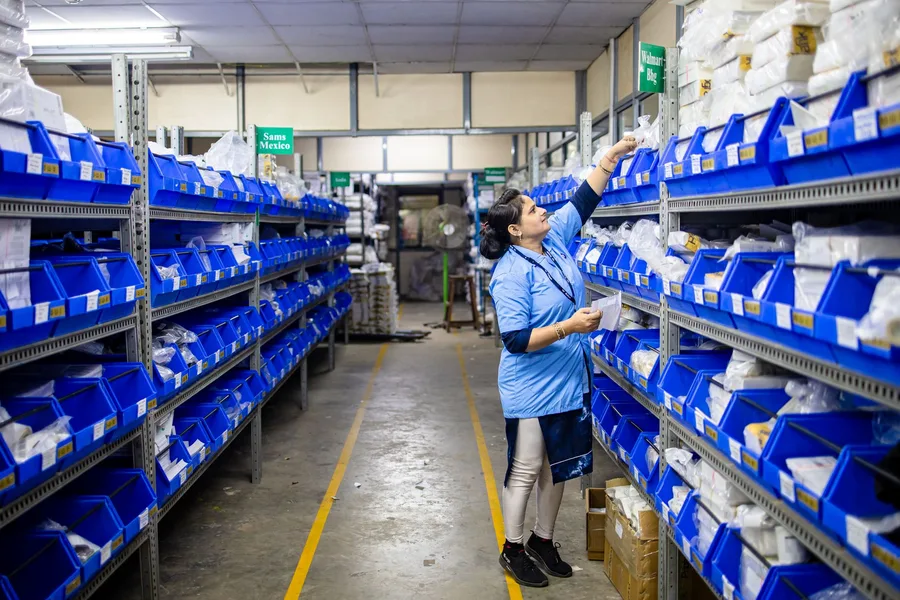
Bin location management. Every storage slot in your warehouse gets a unique code. Products do not just exist “in the warehouse” — they exist at a specific, findable location. This is the feature that eliminates the “picker couldn’t find it” problem. Look for software that lets you define aisle, rack, shelf, and bin levels, and that supports fast-moving products being assigned to locations closest to the packing station.
Marketplace integration quality. WMS software is only useful if it syncs with the marketplaces your customers actually shop on. Verify which integrations are native (built and maintained by the software vendor) versus third-party. Native integrations are more reliable and sync faster. For Indonesian sellers, confirm Shopee, Lazada, Tokopedia, and TikTok Shop are all supported. Check whether the integration syncs inventory in near-real-time or on a delay of 5-15 minutes — that gap matters during flash sales.
Pick list generation. Basic pick lists list items by order. Better systems support wave picking — grouping multiple orders into a single warehouse run to minimize picker travel time. For warehouse operations processing 100+ daily orders, wave picking can reduce total pick time by 30-40% according to published warehouse operations case studies.
Cycle counting support. Full inventory audits shut down operations for a day. Cycle counting spreads the counting workload across daily tasks — count a few bins per day, cover the entire warehouse over a month without downtime. WMS software that supports cycle counting lets you set count frequency by product value or movement rate.
Multi-location support. If you operate from more than one warehouse now — or plan to in the next 12 months — confirm that the software manages multiple locations under a single account. Switching systems mid-growth is expensive.
WMS Software Pricing in Indonesia
| Software | Type | Starting Price | Best For |
|---|---|---|---|
| Ginee | Combined OMS+WMS | Free (100 orders/mo) | Under 300 SKUs, basic warehouse needs |
| Sellercraft | Combined OMS+WMS | ~IDR 300,000/mo | Budget sellers needing basic stock tracking |
| Jubelio | Dedicated mid-tier WMS | ~IDR 500,000/mo | 300-1,000 SKUs, genuine warehouse features |
| Anchanto | Enterprise WMS | ~IDR 5,000,000+/mo | 1,000+ SKUs, multi-warehouse, enterprise scale |
Pricing above reflects publicly documented starting tiers based on vendor documentation and seller community reporting. Actual pricing depends on order volume, number of users, and warehouse size. Always verify current pricing directly with vendors before committing. Statista’s logistics market data for Indonesia tracks warehousing sector growth alongside ecommerce expansion — a useful benchmark for understanding the scale of warehouse operations in this market.
How to Choose WMS Software for Your Operation
The selection decision is simpler than it looks. Match your current scale to the right software tier, not the tier you plan to reach in three years.
Under 100 SKUs, under 30 daily orders: WMS software is premature. Use Ginee’s free tier or a structured spreadsheet. The overhead of a warehouse system at this scale creates work without solving a real problem.
100-300 SKUs, 30-80 daily orders: Start with Ginee or Sellercraft’s paid tiers. Basic bin management and pick lists from a combined OMS+WMS tool will cover this scale. You may not need dedicated WMS features yet — evaluate once picking errors become a regular problem.
300-1,000 SKUs, 80-300 daily orders: This is Jubelio territory. The warehouse module provides bin-level management and cycle counting that basic combined tools cannot match. Budget IDR 500,000-1,500,000/month for a tool that will carry your operation through significant growth.
1,000+ SKUs or multi-warehouse: Evaluate Anchanto. The enterprise implementation investment is justified by the operational scale. Anchanto’s multi-warehouse routing and wave picking optimization deliver measurable efficiency gains that simpler tools cannot provide at this volume.
One practical step before signing any contract: run a trial with your actual warehouse data. Most WMS software providers offer 14-30 day trials. Import your real SKU list and order history. If the pick list generation feels clunky or marketplace sync lags, that problem will not improve after go-live.
For a broader view of how WMS software fits into your full order management stack, see the ecommerce order management system guide — it covers how WMS software connects to OMS, 3PL, and courier integrations. For guidance on warehouse staffing as you implement new software, the warehouse staff hiring and roles guide covers how roles and workflows shift when a WMS replaces manual tracking.
Frequently Asked Questions
What is WMS software?
WMS software (warehouse management system software) is a platform that organizes physical warehouse operations: it assigns every product a specific storage location, generates pick lists for staff, tracks stock movement between bins, and runs cycle counts to verify accuracy. In Indonesia, WMS software typically connects to Shopee, Lazada, Tokopedia, and TikTok Shop so marketplace orders automatically generate warehouse pick instructions.
What WMS software works with Shopee and Lazada in Indonesia?
The main WMS software options with verified Shopee and Lazada integration in Indonesia are Ginee (free to IDR 700,000/month), Jubelio (IDR 500,000+/month with dedicated warehouse module), Sellercraft (IDR 300,000+/month), and Anchanto (IDR 5,000,000+/month for enterprise). Jubelio offers the most complete WMS feature set at a mid-market price point.
How much does WMS software cost in Indonesia?
WMS software pricing in Indonesia ranges from free (Ginee basic tier) to IDR 300,000-1,500,000 per month for mid-tier platforms. Enterprise WMS software like Anchanto starts at IDR 5,000,000+ per month. Most sellers between 100-500 SKUs and 30-150 daily orders find mid-tier software covers all core warehouse needs.
Is cloud-based WMS software better than on-premise for Indonesian sellers?
Cloud-based WMS software is the right choice for the vast majority of Indonesian ecommerce sellers. It requires no server infrastructure, updates automatically, and can be accessed remotely. On-premise WMS makes sense only for large enterprises with dedicated IT teams. Ginee, Jubelio, and Sellercraft are all cloud-based.
Can WMS software replace a spreadsheet for warehouse management?
Yes, for any operation processing more than 30 daily orders across 2+ marketplaces. A spreadsheet cannot generate pick lists, assign bin locations, or sync inventory in real time. WMS software automates these tasks and connects to your marketplace accounts, preventing overselling and stockouts that spreadsheet-based tracking routinely causes at higher order volumes. See the ecommerce inventory management guide for a broader view of how WMS software fits into your inventory stack.
Keep Reading
- WMS Systems: What They Are and How They Work – the complete guide to WMS features, who needs them, and getting started
- Anchanto WMS Explained – deep dive on Indonesia’s enterprise-grade WMS option
- WMS Warehouse Management: How It Works – the five warehouse processes a WMS controls
- Ecommerce Order Management System – how WMS software fits into your full order management stack