
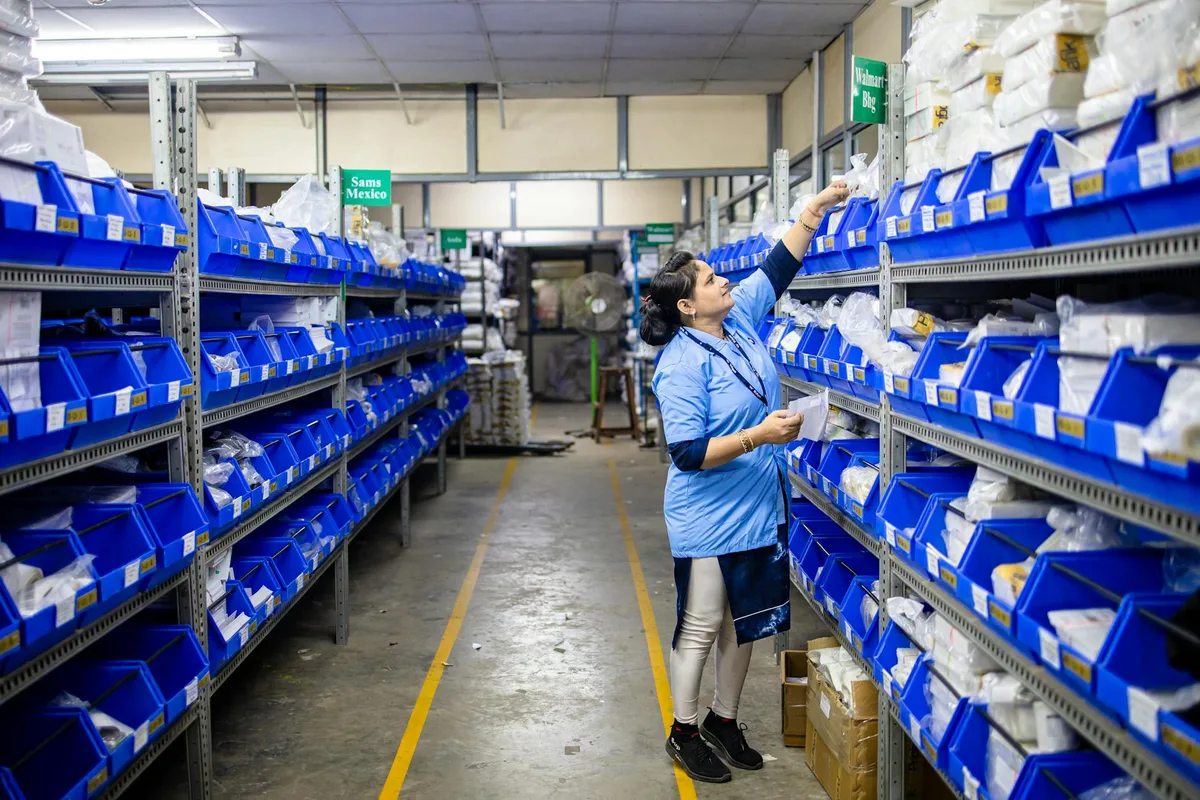
Your picker just shipped the wrong item. Again.
The pick list was in someone’s head. New SKUs arrived last week and went wherever there was space. Now you have an angry customer on Shopee, a return in progress, and a staff member who swears it was the right shelf.
A whse management system exists to make that problem impossible.
“Whse” is the standard abbreviation for warehouse — used across logistics documents, shipping platforms, and inventory software throughout Indonesia and the broader region. A whse management system, also written as “whse mgmt system” or simply WMS, is software that assigns every product a specific physical location, generates structured pick lists, and tracks every inventory movement inside your warehouse.
What Does “Whse” Mean in Warehouse Management?
“Whse” is the logistics abbreviation for warehouse. A whse management system (whse mgmt system or WMS) is software that organizes warehouse operations: it assigns products to specific storage locations, generates pick lists, tracks stock movement, and runs inventory counts. Indonesian sellers use the term interchangeably with “warehouse management system.”
The abbreviation appears on purchase orders, goods receipts, shipping documents, and inside most WMS interfaces. When an Indonesian seller asks about a “whse management system,” they mean the same tool as “warehouse management system Indonesia.”
For sellers running multi-marketplace operations across Shopee, Lazada, and Tokopedia, the management layer matters most. The physical space might be a 150 square meter room in Cakung or a section of a Jakarta logistics facility. According to Statista’s ecommerce market data for Indonesia, Indonesia’s online retail market has grown significantly as sellers expand across multiple channels — increasing pressure on warehouse operations built for single-channel fulfillment.
What Does a Whse Management System Actually Do?
A whse management system performs five core functions: storage location assignment, pick list generation, goods receiving and put-away, stock movement tracking, and cycle counting. Each function converts a manual, memory-based operation into a traceable warehouse step.
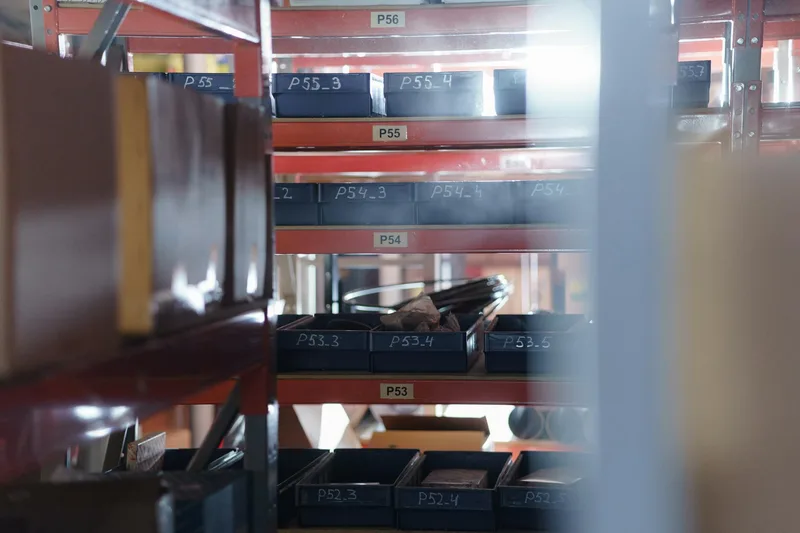
Storage location assignment gives every item a specific address — a code like A2-R3-S1-B04 (Aisle 2, Rack 3, Shelf 1, Bin 04). New stock gets a bin on arrival; orders generate a pick location instead of a memory test.
Pick list generation replaces memory-based picking with a sorted warehouse route. Advanced tools group multiple orders into one pass so each bin is visited once instead of multiple times.
Goods receiving guides the team when new inventory arrives: scan each item, verify against the purchase order, system assigns a bin. This eliminates the “put it wherever there is space” pattern that makes stock unfindable within days.
Stock movement tracking creates an audit trail for every inventory event: received at dock, moved to bin A-14, picked for order #87234, scanned at packing station. When a discrepancy appears between your system count and your marketplace stock numbers, the movement log shows exactly where the gap appeared.
Cycle counting replaces full warehouse shutdowns for inventory audits with a continuous, small-scale counting schedule. The system assigns daily count tasks — typically 10-20 bin locations per day — so every location gets verified monthly without halting operations.
When Does Your Operation Need a Whse Management System?
An Indonesian ecommerce seller needs a whse management system when they hit three or more of these thresholds: 300+ active SKUs, 80+ daily orders across two or more marketplaces, two or more warehouse staff, or multiple storage zones.
Most sellers researching a WMS are already past the point where they needed one: stock counts drift, pickers can’t locate products, shipments vanish until the next physical count.
Here is a readiness framework that matches operation size to system type:
| Operation Size | Orders/Day | SKUs | Staff | Recommended Approach |
|---|---|---|---|---|
| Early stage | Under 30 | Under 100 | 1-2 | Spreadsheet or Ginee free tier |
| Growing | 30-80 | 100-300 | 2-4 | Ginee, Sellercraft, or Jubelio starter |
| Mid-market | 80-300 | 300-1,000 | 4-10 | Jubelio with warehouse module or Anchanto SMB |
| Scale | 300+ | 1,000+ | 10+ | Anchanto or dedicated enterprise WMS |
Tier descriptions based on each platform’s Indonesia feature documentation and seller community reports as of Q2 2026. Verify current tier limits directly with vendors before committing.
The clearest signal: staff cannot answer “where is [SKU] right now?” without walking the floor.
How Do Whse Management Systems Integrate with Indonesian Marketplaces?
Whse management systems in Indonesia connect to Shopee, Lazada, Tokopedia, and TikTok Shop through direct API integrations or middleware tools. Stock updates flow from the WMS to each marketplace automatically after every pick, keeping listed quantities aligned with physical inventory and reducing overselling.
According to Google, Temasek, and Bain’s e-Conomy SEA 2024 report, Indonesia’s ecommerce GMV exceeded USD 65 billion in 2023, with Shopee, Lazada, and Tokopedia accounting for most seller transactions. Managing inventory across these channels without a connected system leads to overselling — one of the most common causes of account warnings and suspensions in Indonesian marketplaces.
The integration works in two directions:
Inbound (orders to WMS): A Shopee order flows into the WMS, generates a pick list for warehouse staff, and the marketplace status updates automatically once the pick is confirmed at the packing station.
Outbound (stock to marketplaces): When a pick reduces physical stock, the WMS pushes updated counts to all connected marketplace listings — Shopee, Lazada, Tokopedia — within minutes. This prevents 5 remaining units from showing as 50 available across your storefronts.
Integration speed varies: Ginee and Jubelio offer near-real-time sync; others update on a 5-15 minute cycle.
What Are the Key Features of a Whse Management System?
The features that deliver the most measurable value for Indonesian ecommerce operations are bin location management, pick list generation, barcode scanning support, and multi-channel inventory sync. Returns management adds value at larger scale but is not critical for sellers processing under 300 daily orders.
Not all WMS features matter at every scale.
Bin location management is non-negotiable. If the system cannot assign and track specific storage locations, it is an inventory app, not a WMS. Every product needs an address, not just a count.
Wave picking and barcode scanning add the most value at 50+ orders per day. Grouping orders into one pass reduces bin revisits; barcode scanning via handheld device or smartphone speeds receiving and pick confirmation. Jubelio and Anchanto support mobile scanners available locally, based on current electronics distributor listings.
Multi-channel inventory sync with Shopee, Lazada, and Tokopedia is essential for any operation running more than one marketplace store. The WMS must push stock updates to all connected channels when any pick reduces available quantity.
Returns processing becomes important once returns exceed 5% of daily orders. A WMS should log the return, guide inspection, and either restock the item or flag it for disposal.
Which Whse Management Systems Are Available in Indonesia?
Indonesian sellers evaluating a whse management system have four main options: Ginee (free tier for small sellers), Jubelio (mid-market OMS and warehouse integration), Sellercraft (strong multi-channel sync), and Anchanto (enterprise-grade WMS for large operations). Pricing ranges from free to IDR 10,000,000+ per month depending on scale.
Main options for Indonesian sellers:
| Platform | Best For | Core WMS Features | Est. Pricing (IDR/month) |
|---|---|---|---|
| Ginee | Small multi-channel sellers | Basic inventory sync, order management | Free to ~500,000 |
| Jubelio | Mid-market, OMS + WMS combined | Pick lists, bin management, wave picking | ~300,000 – 1,500,000 |
| Sellercraft | Multi-channel sync focus | Inventory sync, order routing | ~400,000 – 1,200,000 |
| Anchanto | Enterprise, 3PL operations | Full WMS: slotting, labor tracking, advanced reporting | 5,000,000+ |
Pricing sourced from each platform’s Indonesia documentation and Indonesian seller community reports as of Q2 2026. Confirm current rates directly with each vendor before committing.
Sellercraft is strongest when marketplace sync is the primary concern. Jubelio and Anchanto offer deeper warehouse features when internal bin management and pick routing matter at scale.
For seller reviews and platform-specific integration details, see the WMS systems comparison guide.

How Do You Set Up a Whse Management System?
Setting up a whse management system for an Indonesian ecommerce operation takes 2-4 weeks. The critical path is: audit bin layout, import SKU list, assign bin locations, configure marketplace integrations, run a parallel test with live orders, and train warehouse staff.
The setup runs in four phases. First, audit and number every bin with a grid code (Aisle A-Z, Rack 1-N, Shelf 1-N, Bin 1-N), then import your full SKU list — exported from Shopee Seller Center or your current inventory tool — and clean up duplicates during import. Second, assign each SKU a bin location: fast-moving products near the packing station, slow movers on higher shelves. Connect marketplace accounts via OAuth and verify that synced stock counts match your listings before going live. Third, run the WMS in parallel with your existing process for 5-7 days to catch integration gaps before full cutover. Fourth, train staff on the pick list interface, scanner use, and receiving workflows — most teams reach operational speed within the first week, based on seller reports in Indonesian ecommerce communities.
Frequently Asked Questions
What does whse stand for in warehouse management?
Whse is the logistics abbreviation for warehouse — used on shipping documents, purchase orders, and inside inventory software interfaces. A whse management system (also called whse mgmt system or WMS) is the same as a warehouse management system: software that organizes physical inventory storage, pick lists, and stock movement tracking inside a warehouse facility.
Does a whse management system work with Shopee and Lazada in Indonesia?
Yes. The main whse management tools in Indonesia — Ginee, Jubelio, Sellercraft, and Anchanto — all integrate with Shopee, Lazada, Tokopedia, and TikTok Shop via API. Integration quality varies: Ginee and Jubelio offer near-real-time stock sync; others update on a 5-15 minute cycle. Test actual sync speed with your live accounts before committing.
When does an Indonesian ecommerce seller need a whse management system?
A whse management system becomes necessary when you store 300+ SKUs, process 80+ daily orders across two or more marketplaces, or employ warehouse staff who need structured pick lists to avoid errors. Below 100 SKUs and 30 daily orders, a spreadsheet or Ginee’s free tier covers the need.
How much does a whse management system cost in Indonesia?
From free (Ginee’s basic tier) to IDR 300,000-1,500,000 per month for mid-tier platforms like Jubelio, and IDR 5,000,000+ for enterprise platforms like Anchanto. Confirm current rates with each vendor — pricing varies by SKU count, order volume, and number of connected marketplace channels.
What is the difference between a whse management system and an order management system?
A whse management system manages what happens inside the warehouse: bin locations, pick lists, stock movement, and cycle counts. An order management system manages the order lifecycle outside the warehouse: capturing orders from Shopee and Lazada, generating shipping labels, and syncing delivery tracking. Most Indonesian mid-market tools like Jubelio and Ginee combine both functions in a single platform.